Key Horeca Results in Summer 2025


In a global context full of changes and fluctuations, the hospitality sector continues to face the growing need to understand, meet, and adapt to the expectations of consumers who are still dealing with the challenges of the post-pandemic “new normal.” In this scenario, digitalization and innovation emerge as key elements for developing new concepts and experiences that create in consumers the need to turn leisure moments into an essential priority.
Within the framework of HIP – Horeca Professional Expo – 2024, Xavier Mallol, CEO and Founder of Delectatech, a company specialized in the collection and analysis of restaurant data through Big Data and Artificial Intelligence, was part of the lineup of speakers who highlighted the importance of integrating new tools and resources that contribute to optimized management and decision-making processes.
In his presentation titled “Beyond Food Cost: Drivers of Success in 2023 in the Restaurant Industry,” Xavier began by providing context to the audience regarding Spain’s economic situation compared to the Eurozone and the United States, in order to establish a frame of reference for evaluating the sector’s performance.
Using a Horeca performance matrix developed by Delectatech, he explained the distribution of establishments according to their performance in terms of average ticket and average occupancy during 2023, placing special emphasis on the 54.98% of establishments that positioned themselves as winners by managing to increase both indicators.
The Chartered Community of Navarre, Cantabria, Aragón, and the Region of Murcia are among the top regions with the highest concentration of winning establishments—those that successfully increased both their average ticket and occupancy throughout 2023. Among the regions with the lowest percentage of winners are Catalonia, Madrid, Extremadura, La Rioja, and the Canary Islands.
The analysis reveals that, among the areas with the greatest volume of establishments, those with a more affordable average ticket were the ones that achieved significant increases in both their average ticket and their occupancy levels.
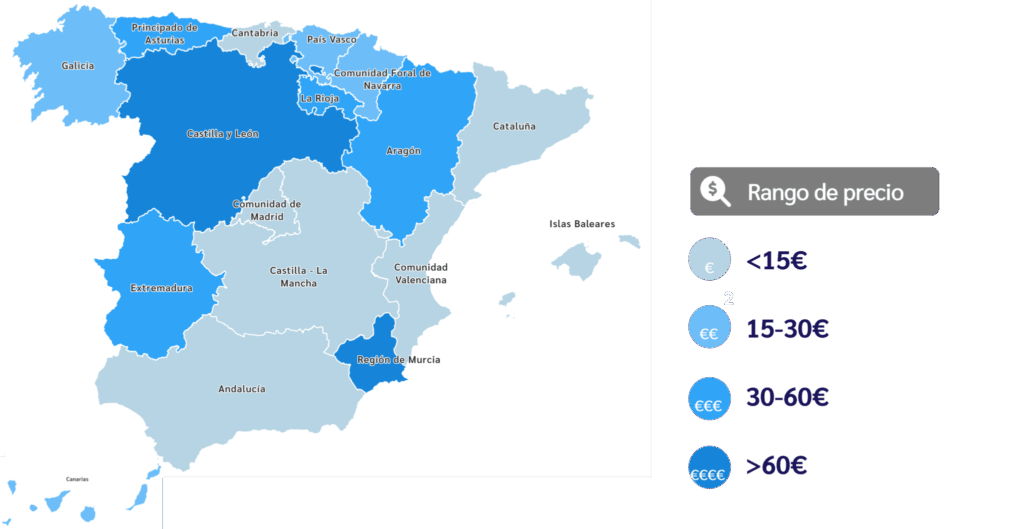
Among the winning establishments in Spain, tapas hold the greatest relevance across much of the country, followed by pinchos, pizza, and lastly, sandwiches and hamburgers.

In conclusion, and in line with recent changes in consumption trends and habits, consumers continue to seek leisure moments, but alongside experiences that allow them to enjoy themselves without neglecting their budget. In this way, the challenge for the restaurant industry will lie in its ability to focus on three fundamental pillars: adaptation, flexibility, and resilience.
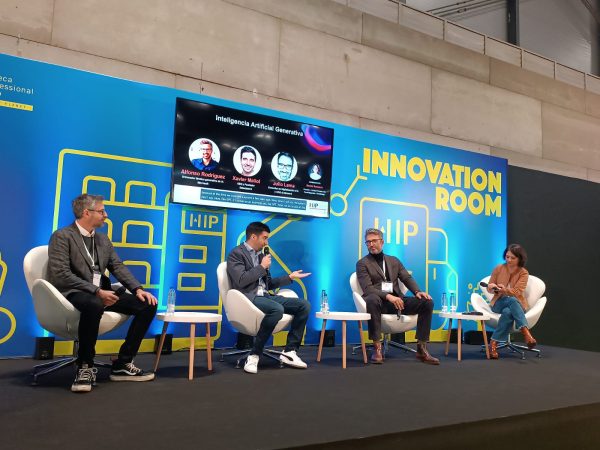
To conclude Delectatech’s participation in HIP24, Xavier took part in a highly engaging round table on Generative Artificial Intelligence in Horeca, moderated by Beatriz Romanos. Together with two leading experts: Alfonso Rodríguez, Microsoft Generative AI Technical Trainer, and Julio Lema, COO of AI-Network, Xavier shared his perspective on the growing importance of AI in the business performance of the hospitality sector.
Would you like more information about this data?
The data used for the analysis is part of Delectatech’s extensive database, which is fed by information published across various online directories and restaurant websites: descriptions, menus, customer reviews, photos, ratings, rankings, tags, opening hours, foot traffic, and more.
Our Artificial Intelligence and Big Data engine is responsible for gathering, reading, and analyzing this raw data from more than 250,000 foodservice establishments, transforming it into contextualized knowledge. Delectatech makes this data available to all industry stakeholders through the FoodRadar web application, which allows you to access the most exclusive and up-to-date information in just a few clicks.