Key Horeca Results in Summer 2025


The hospitality sector began 2023 with hopes for reactivation and recovery after a 2022 marked by the transition back to normality following the pandemic, which had significantly affected the Horeca sector. Restaurants approached Easter Week with optimism, forecasting a substantial increase in both domestic and international tourism. However, due to rising inflation, this Easter was expected to be the most expensive in history, with hospitality prices increasing by around 15%.
On Tuesday, April 25, Xavier Mallol, CEO and co-founder of Delectatech, presented a study in a webinar conducted using Delectatech’s AI and Big Data engine. The study analyzed online activity across directories for a sample of over 240,000 restaurants in Spain during Easter Week.
“Restaurants and tourism generate a lot of public data that, if analyzed properly, can answer many relevant questions, such as what diners like most and the characteristics of each type of establishment,” says Xavier. The focus was on diners and their comments what was said and by whom using KPIs such as product relevance and diner satisfaction to analyze results.
During Easter Week, there was an increase in domestic tourism concentrated in major cities, mainly in the capital. The study shows that 35.4% of online restaurant activity in Barcelona came from international profiles (mainly English, German, and Italian), while Madrid registered 11.7%. Nevertheless, Madrid continues to lead in overall restaurant activity alongside Cantabria, Catalonia, and Valencia.
Although the Balearic and Canary Islands maintain a strong presence of international visitors, with nearly 50% distribution, northern regions especially Cantabria and the Basque Country saw an increase compared to last year.
Following the end of the state of alarm and the ongoing economic recovery, restaurant revenues increased, largely driven by higher menu prices.
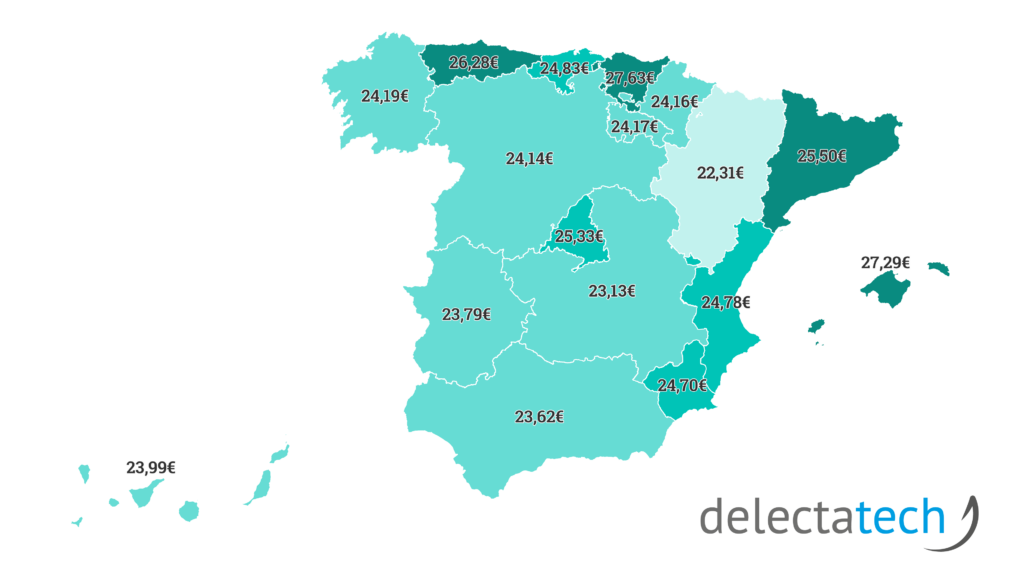
Major cities such as Barcelona and Madrid, the Mediterranean coast, and the Canary and Balearic Islands saw an increase in average spend per diner compared to 2022. The Basque Country is the region with the highest spend per establishment at €27.64, while Aragón has the lowest at €22.32.
Analyzing by nationality, French diners spend the most per restaurant, averaging €27.11, while Portuguese (€23.22) and German (€23.60) diners spend the least. Interestingly, there is a relationship between spending and satisfaction: those who spend more and order more tend to rate their experience lower, whereas those who spend less are more satisfied with the service and food.
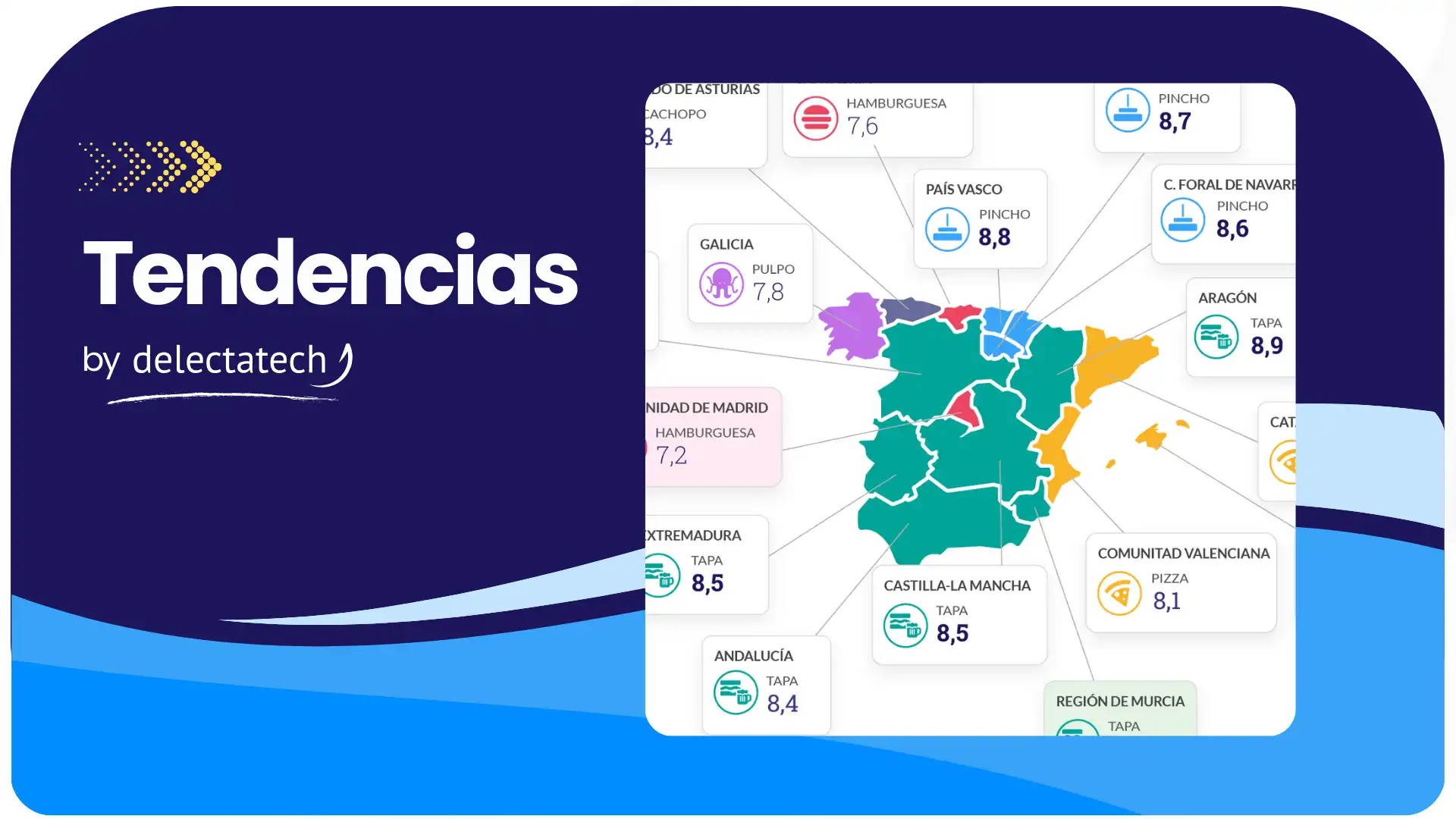
Despite Spain’s rich and diverse gastronomy, tapas once again lead the ranking of the most demanded culinary offerings during Easter Week, being both the most ordered and best-rated. They are mostly consumed in central and southern Spain, followed by pizza on the coast, pinchos in the north, and hamburgers also in central regions.
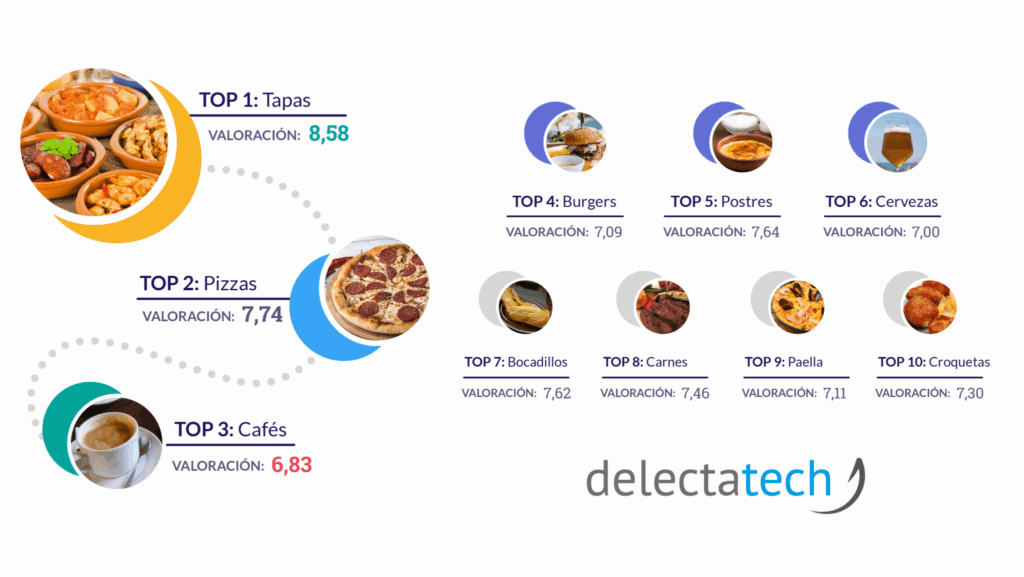
On the other hand, international diners seek the top sun-and-beach tourism dishes: paella, seafood, sangría, and cocktails. Due to the climate, they tend to go out for dinner, unlike domestic diners, who prefer lunch outings.
These are some of the insights collected from online restaurant activity in Spain using Delectatech’s AI and Big Data engine during Easter Week 2023—a period of reactivation and recovery that, although not yet reaching 2019 levels, shows a promising trajectory.
If you want to access this kind of information and more, register on Food Radar and download our reports for free by clicking here.
Access Food Radar and download the report “What Happened in Restaurants This Easter Week?”
DOWNLOAD FOR FREE